
Quick Article Directory
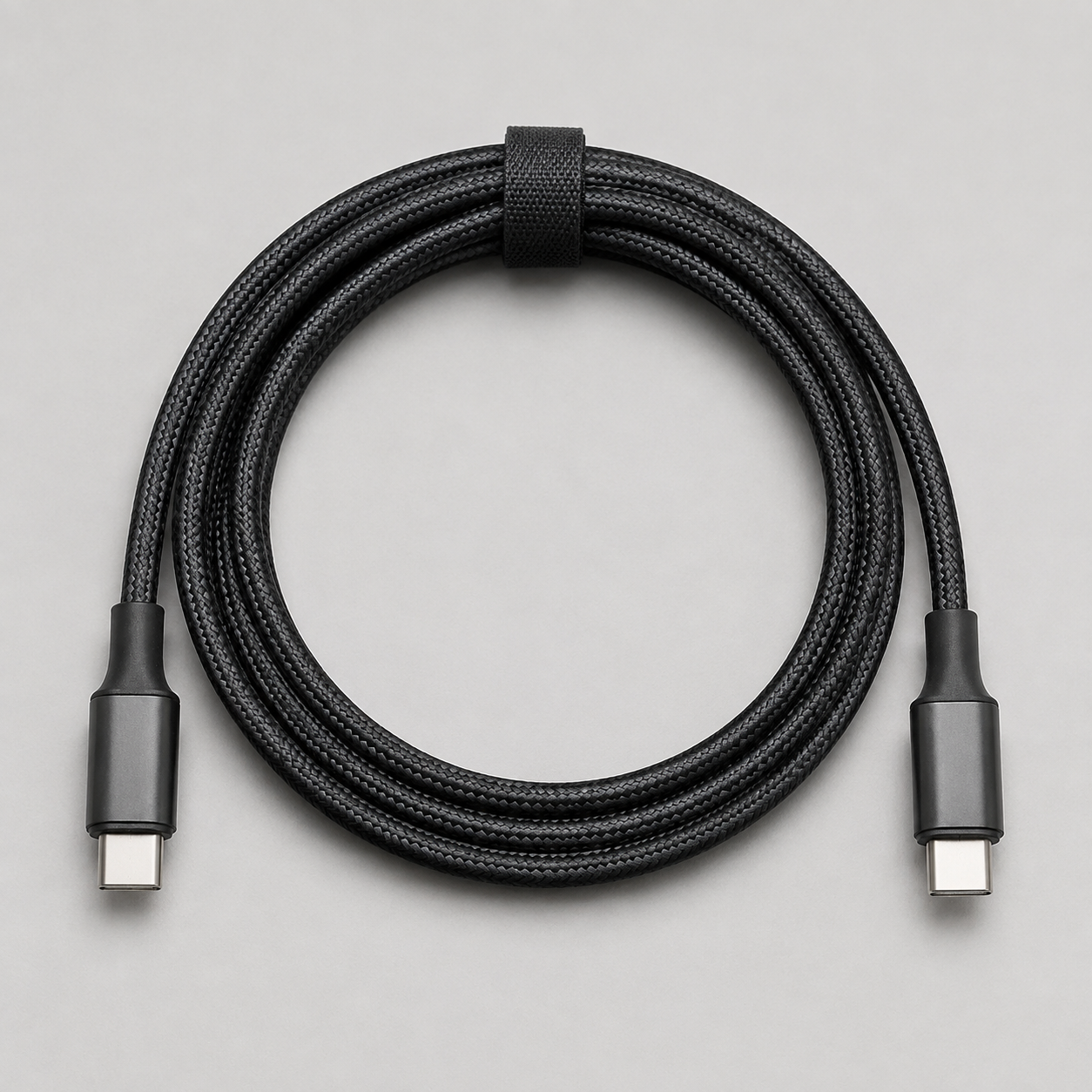
USB-C Cable Wholesale Quality Guide for B2B Buyers
Topic Research and Search Intent
Blog title: USB-C Cable Wholesale Quality Guide for B2B Buyers
Target keyword: USB-C cable wholesale quality guide
Search intent: Buyers want to know how to choose USB-C cables for wholesale, what power and data specifications matter, when E-Marker chips are needed, how to test durability, and how to avoid customer complaints after shipment.
Why this topic fits a B2B export website: USB-C cables are high-volume accessories, but many buyers struggle with specification confusion. A cable may look simple, yet power rating, data speed, connector quality, jacket material, and packaging claims all affect customer trust. A detailed procurement guide can attract buyers who are close to requesting a quotation.
Introduction
USB-C cables are among the most frequently purchased consumer electronics accessories. They are used with smartphones, tablets, laptops, chargers, power banks, car chargers, earbuds, game devices, monitors, and many portable electronics. For wholesale buyers, this category is attractive because it has repeat demand and flexible packaging opportunities. At the same time, it is a category where unclear specifications can quickly create after-sales problems.
A USB-C cable can be designed mainly for charging, mainly for data, or for both. It may support 60W, 100W, or higher power levels depending on cable construction and electronic identification. It may transfer data at basic USB 2.0 speed or higher USB 3.x speeds. It may use PVC, TPE, braided nylon, or silicone-like material. It may have a standard connector shell or reinforced strain relief. These differences are not always obvious in photos, so buyers need a structured sourcing process.
This guide explains how international buyers can evaluate USB-C cables before wholesale procurement. It covers power rating, E-Marker considerations, data speed, materials, factory testing, shipment inspection, packaging claims, and RFQ preparation. Buyers sourcing chargers may also find ByteAero's power bank and fast charger wholesale guide useful, because cable performance affects the full charging experience.
Why USB-C Cable Specifications Matter
The cable is often the lowest-priced item in a charging setup, but it can become the weakest link. A good charger and device cannot perform correctly if the cable does not support the expected current, data function, or connector stability. For retail buyers, unclear cable claims can lead to poor reviews. For distributors, wrong specification matching can create returns from business customers. For private-label buyers, packaging claims must be conservative and supportable.
USB-IF information about USB compliance is a useful reference point because it explains the role of compliance testing and product evaluation. Not every wholesale buyer will request formal certification for every cable order, but buyers should understand that USB-C is a technical interface, not only a connector shape.
Key Specifications to Confirm
Connector Type and Direction
Confirm whether the cable is USB-C to USB-C, USB-A to USB-C, USB-C to Lightning-compatible, or another combination. USB-C to USB-C cables are increasingly important for modern fast charging. USB-A to USB-C cables remain popular for entry-level chargers and older adapters. The buyer's sales channel should determine which connector type is most practical.
Power Rating
Common USB-C to USB-C cable ratings include 3A and 5A designs. A 3A cable is commonly associated with up to 60W charging under suitable USB Power Delivery conditions. A 5A cable is typically needed for higher wattage claims such as 100W or above, depending on the power profile and device behavior. Buyers should avoid putting aggressive wattage claims on packaging unless the cable construction, E-Marker, and test results support them.
E-Marker Requirements
For many higher-power USB-C cables, an E-Marker chip is used to identify cable capability to connected devices and chargers. Buyers should ask suppliers whether the cable includes E-Marker, which power level is supported, and whether test reports or sample verification can be provided. This is especially important for laptop charging, premium retail, and business procurement channels.
Data Speed
Not all USB-C cables support high-speed data transfer. Some cables are designed mainly for charging and use USB 2.0 data capability. Others support higher-speed transfer for external drives, monitors, or docking applications. If the product will be sold as a charging cable, basic data may be acceptable. If the product will be marketed for file transfer or professional use, buyers should confirm the data rating and test actual transfer behavior.
Cable Length
Common retail lengths include 0.5m, 1m, 1.5m, 2m, and 3m. Longer cables are convenient but can be more difficult to design for stable high-power charging or high-speed data. Buyers should choose length based on application: short cables for power banks, 1m cables for general retail, 2m cables for home and office use, and reinforced longer cables for selected channels.
Jacket Material and Strain Relief
PVC is common for entry-level products. TPE can offer a softer feel. Braided nylon can look premium and improve perceived durability. Silicone-like jackets may feel flexible and modern but should be checked for dust pickup and packaging presentation. Strain relief near the connector is critical because many cable failures occur at the bend point. During sample review, bend the connector area repeatedly and check whether the jacket separates or deforms.
Factory Testing for USB-C Cables
Factory testing should be defined before production. A practical test plan may include:
- Appearance inspection for color, jacket finish, connector scratches, and logo placement.
- Continuity test to confirm correct wiring.
- Charging test with compatible charger and device.
- Power-load verification based on advertised wattage.
- Data transfer test when the cable is sold with data capability.
- Connector insertion and extraction test.
- Bend test near both connector ends.
- Packaging and barcode inspection.
For larger orders, buyers may request pre-shipment inspection with random sampling. The inspection should compare finished goods against approved samples, packaging artwork, carton marks, and order specifications.
Packaging Claims and Compliance Language
Packaging should be clear and accurate. Instead of using vague terms such as "super fast for all devices," use specific but careful claims such as "supports up to 60W USB-C charging with compatible USB-C PD chargers and devices." If a cable supports 100W, include conditions and avoid implying that every device will charge at maximum speed. If the cable supports only USB 2.0 data, do not use imagery that suggests high-speed external-drive transfer.
Retail packaging should also include length, connector type, color, basic compatibility notes, warranty text, barcode, and country/region labeling. For private-label projects, buyers should approve both physical samples and printed packaging before mass production.
Common Product Applications
USB-C cables can be positioned for several B2B channels:
- Smartphone accessory retail.
- Tablet and laptop charging bundles.
- Power bank accessory kits.
- Corporate gifting with custom packaging.
- Marketplace multipacks.
- Travel and office accessory sets.
Each application has different priorities. A corporate gift buyer may prefer logo printing and stable basic charging. A laptop accessory buyer may require E-Marker and higher power. A marketplace seller may need strong packaging photos, multiple colors, and clear specifications.
Quote Preparation Checklist
To receive an accurate quotation, buyers should provide:
- Connector type.
- Required length.
- Power rating.
- Data speed requirement.
- E-Marker requirement if applicable.
- Jacket material and color.
- Logo or private-label needs.
- Packaging style.
- Target market and compliance expectations.
- Estimated order quantity and shipping destination.
The more precise the RFQ, the easier it is for a supplier to recommend the right cable and avoid quoting an unsuitable low-spec model.
Supplier Evaluation and Production Consistency
USB-C cable buyers should evaluate whether a supplier can keep quality consistent across repeat orders. A cable is a small product, but it contains many details that can change: copper conductor specification, connector shell, internal welding, E-Marker chip, jacket material, color, logo printing, packaging, and carton labeling. If these details are not controlled, the first shipment may be acceptable while the second shipment creates customer complaints.
Ask how the supplier controls incoming materials and whether the same approved structure will be used for repeat production. For private-label orders, keep an approved golden sample. This sample should include the finished cable, connector finish, jacket texture, logo placement, retail packaging, manual or insert card, and carton mark. Shipment inspection should compare production goods against this reference.
Buyers should also clarify how defective products are handled. A practical agreement may include photo and video evidence, batch number tracking, and replacement policy for confirmed production defects. This does not need to be complicated, but it should be discussed before large orders. A supplier that can explain its quality-control process clearly is usually easier to work with than one that only repeats general promises.
RFQ Example for USB-C Cable Procurement
A useful RFQ might read:
"We need USB-C to USB-C cables for retail sale in the Middle East market. Please quote 1m and 2m lengths, black and white color, 60W and 100W options, braided and TPE jacket options, private-label packaging, barcode label, English manual insert, and carton details. Please confirm whether the 100W version includes E-Marker, what data speed is supported, sample lead time, production lead time, and inspection process."
This RFQ allows suppliers to quote several suitable options while keeping the comparison structured. If one cable is cheaper, the buyer can check whether it has lower power rating, no E-Marker, simpler jacket material, slower data speed, or less durable connector construction.
Realistic Product Positioning
Not every cable needs to be premium. For some markets, a reliable 60W cable with clean retail packaging may be better than an expensive 100W cable that exceeds the customer's need. For laptop accessory channels, higher-power cables may be necessary. For power bank bundles, short cables can reduce cost and improve convenience. For gift sets, color, logo placement, and packaging may matter more than high-speed data.
The best wholesale cable is the one that matches the sales channel honestly. Buyers should avoid using one product description for every model. A basic charging cable, a high-power laptop cable, and a data-transfer cable should have different packaging claims and different product pages. This improves trust and makes customer support easier.
After-Sales and Customer Education
Many cable complaints are caused by misunderstanding rather than product failure. A customer may expect laptop charging from a cable that was designed for smartphone charging. Another customer may expect fast data transfer from a cable sold mainly for charging. Buyers can reduce these issues by adding clear packaging notes, online FAQs, and simple compatibility explanations.
For B2B channels, keep records of batch number, production date, and packaging version. If a problem appears after shipment, these records help identify whether it is a single-customer issue, a logistics damage issue, or a production batch issue. Good documentation improves trust between buyer and supplier.
FAQ
What is the difference between a 60W and 100W USB-C cable?
The difference usually involves current rating, cable construction, and electronic identification. A 100W cable commonly requires 5A support and suitable identification for compatible USB-C PD chargers and devices. Buyers should test samples before making packaging claims.
Do all USB-C cables support fast charging?
No. A USB-C connector does not automatically mean high-power fast charging. The cable, charger, device, and charging protocol all affect performance.
Should wholesale buyers choose braided cables?
Braided cables can look more premium and may improve perceived durability, but quality still depends on internal construction, connector assembly, and bend resistance. Buyers should test real samples.
What should be inspected before shipment?
Inspect appearance, connector quality, charging function, data function if advertised, packaging, barcodes, carton labels, color mix, and sample consistency against the approved order.
Image Planning and AI Generation Prompts
Image 1 purpose: Product detail photo.
Insert position: After "Key Specifications to Confirm".
Caption: "Connector finish, cable jacket, and strain relief should be checked before approving USB-C cable samples."
ALT text: "USB-C cable connector detail for wholesale quality inspection"
AI image prompt: "Realistic square product photography of a single USB-C to USB-C cable coiled neatly, connector tips visible, premium blue and white technology styling, full product visible, clean background, no CGI look."
Image 2 purpose: Factory testing photo.
Insert position: After "Factory Testing for USB-C Cables".
Caption: "Factory testing helps verify charging, data transfer, and connector stability before shipment."
ALT text: "USB-C cable factory testing for charging and data transfer"
AI image prompt: "Realistic electronics factory testing scene, Asian technician testing USB-C cables with power meters and smartphones on an organized bench, practical B2B manufacturing photography, natural light, authentic documentary style."
Image 3 purpose: Packaging photo.
Insert position: After "Packaging Claims and Compliance Language".
Caption: "Retail packaging should state connector type, length, power rating, and compatibility notes clearly."
ALT text: "USB-C cable retail packaging for private label wholesale"
AI image prompt: "Realistic commercial photo of USB-C cable retail boxes arranged for shipment inspection, clean export packaging table, barcode labels visible but not readable, modern minimal packaging, warehouse background."
CTA and Inquiry Popup Plan
Mid-article CTA position: After "Factory Testing for USB-C Cables".
CTA text: Ask for Product Catalog
CTA copy: "Request USB-C cable options by length, power rating, material, and packaging style. ByteAero can help match models to your target retail channel."
End CTA position: After "Conclusion".
CTA text: Get a Quote
Popup trigger suggestion: Show after 40% scroll depth, after 30 seconds on page, and on exit intent for desktop users.
Popup title: "Source USB-C Cables for Your Market"
Popup copy: "Send your required connector type, cable length, power rating, and packaging needs. We will suggest practical options for your wholesale order."
Suggested form fields: Name, Email, Phone, Company, Country/Region, Cable Type, Required Length, Order Quantity, Message.
Submit button text: Send Your Requirements
Conclusion
USB-C cable wholesale sourcing should be based on real specifications, not only appearance and price. Buyers should confirm connector type, power rating, data capability, E-Marker needs, material, strain relief, packaging claims, and shipment inspection requirements. A cable that is accurately specified and properly tested can support repeat orders and reduce after-sales issues.
ByteAero helps importers, distributors, and retail buyers source charging accessories, USB-C cables, power banks, hubs, and related consumer electronics. Contact us with your customer requirements, packaging plan, and target order quantity to receive suitable options.