
Everyday charging cables
USB-C cables for phones, tablets, earbuds, and general mobile accessories.
Define 3A or 5A design, intended wattage, data expectation, length, overmold, and supplied charger.Build a cable range with clear performance labels, verified construction, representative device tests, approved branding, and shipment checks for connectors and electrical behavior.
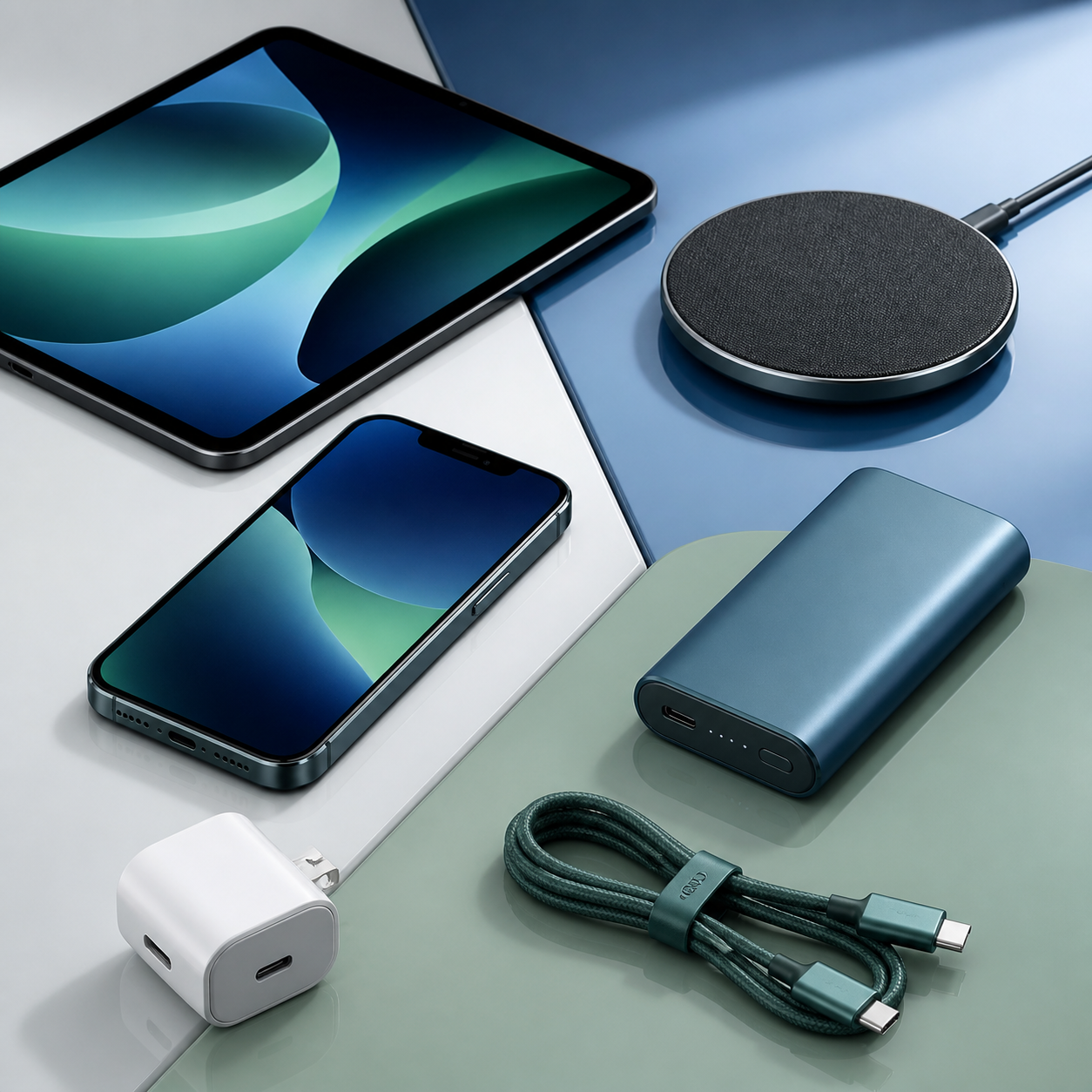
Power rating, data rate, video support, cable length, active or passive construction, E-marker configuration, materials, and certification status are separate decisions. A clear specification prevents a charge-only cable from being marketed as a full-featured product.
USB-C cables for phones, tablets, earbuds, and general mobile accessories.
Define 3A or 5A design, intended wattage, data expectation, length, overmold, and supplied charger.240W-capable cable directions for compatible chargers, laptops, and power products.
Verify E-marker identity, connector and cable construction, voltage drop, temperature, and permitted labeling.USB data cable options for storage, docks, monitors, and professional accessories.
State the exact supported data rate and test it at the supplied length with representative equipment.Full-featured cables for compatible USB-C displays, docks, and host ports.
Confirm host video capability, cable specification, resolution scenarios, charging, and known limitations.Braided, soft-touch, reinforced, right-angle, or longer-life mechanical constructions.
Test connector dimensions, bend and flex points, strain relief, finish consistency, and package claims.Coordinated lengths, colors, power tiers, data tiers, packaging, and brand presentation.
Use visible performance labeling so buyers and users can distinguish each SKU.Customization is useful only when the final configuration remains clear to the buyer, supplier, inspector, and sales channel.
Confirm each option before quotation and repeat it in the approved sample record. Final capability, documentation, MOQ, lead time, and compliance scope depend on the selected product and destination market.
Send Project BriefA repeatable approval sequence keeps commercial expectations and product evidence connected.
Share the target market, sales channel, application, quantity, packaging needs, and timing.
Review configuration, samples, test evidence, commercial scope, and known product limitations.
Freeze the product, accessories, appearance, labels, artwork, instructions, and packaging.
Use the approved reference for production follow-up, inspection, cartons, and document handoff.

Check connector fit, length, diameter, markings, materials, finish, and approved packaging.
Test the intended current and power with defined equipment, cable length, and temperature conditions.
Verify only the functions claimed for the SKU using representative hosts, devices, docks, storage, or displays.
Use agreed bend, flex, insertion, strain-relief, and visual checks with recorded acceptance limits.
Offer clearly labeled charging tiers, lengths, finishes, and device bundles.
Select data, video, dock, display, and high-power cables around defined system tests.
Combine reliable everyday performance with practical branding and simple user information.
Include your market, channel, estimated quantity, required configuration, packaging, and timing.
ByteAero will review the request and continue by email. Product capability, price, MOQ, samples, documentation, and delivery details are confirmed for the selected model and project.
Email: info@byteaero.com
Required fields are marked with *.
These answers outline the buying process. Final details depend on product, destination market, quantity, and customization scope.
No. USB-C describes the connector. Power, data rate, video, E-marker, and other capabilities depend on the cable design and should be stated separately.
E-marker requirements depend on the cable capability and applicable USB specifications. High-current and higher-performance products should be reviewed against the intended design and claims.
Define the bend location, load, angle, rate, number of cycles, connector insertion method, and electrical pass criteria. A cycle number without a method is not comparable.
A visual family is possible, but each SKU should clearly identify length, power rating, data rate, connector type, and any supported video or special function.
Inspection can check quantity, dimensions, appearance, connector fit, continuity, power or data sampling, E-marker where relevant, markings, accessories, packaging, barcodes, and cartons.