
Compact phone chargers
Single-port and dual-port formats for phones, tablets, and mobile accessory ranges.
Confirm protocol, rated output, plug version, enclosure temperature, low-power behavior, and package claims.Source single-port, multi-port, travel, and desktop charging products using documented output behavior, target-device tests, regional plug requirements, and controlled labels.
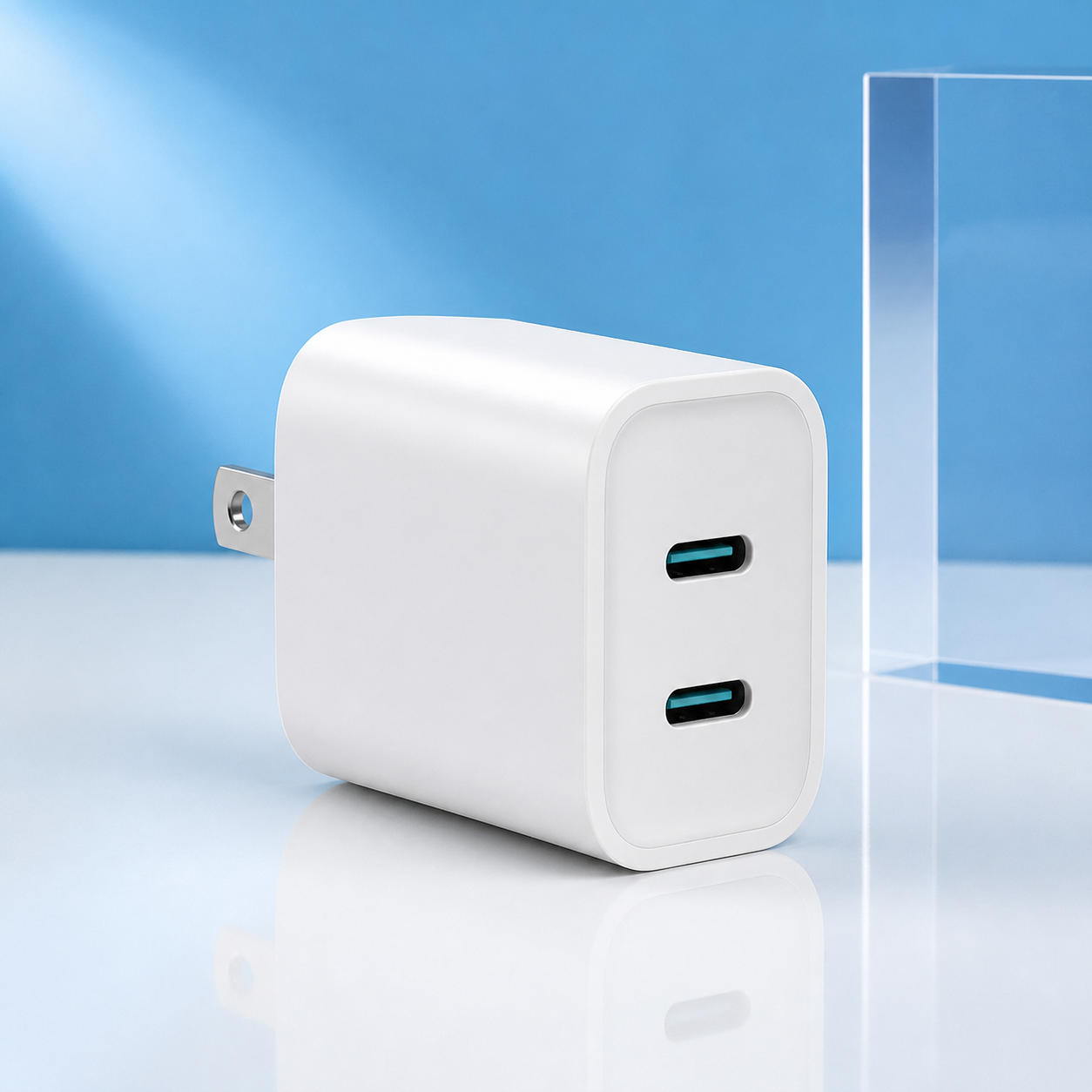
A charger must be evaluated by its complete output profile, port combinations, target devices, cable assumptions, input range, plug design, temperature, protection behavior, markings, and final packaging. Total wattage alone does not explain how a multi-port charger behaves.
Single-port and dual-port formats for phones, tablets, and mobile accessory ranges.
Confirm protocol, rated output, plug version, enclosure temperature, low-power behavior, and package claims.Higher-output USB-C PD products for notebooks, tablets, phones, and travel.
Map voltage profiles and cables to target laptops rather than assuming wattage guarantees compatibility.Compact chargers that allocate total power across several USB-C and USB-A ports.
Approve a complete port-sharing table and test devices as ports are added or removed.Cable-fed charging products for offices, counters, creator desks, and multi-device households.
Review mains cable, stability, idle power, simultaneous output, heat, and desk placement.US, EU, UK, or other destination plug configurations where supported.
Treat plug, label, packaging, instruction, report, and carton references as one controlled market version.Brandable enclosures and packaging for mobile, computer, gift, and travel channels.
Approve logo, claims, output table, safety information, barcode, manuals, and supplied cables.Customization is useful only when the final configuration remains clear to the buyer, supplier, inspector, and sales channel.
Confirm each option before quotation and repeat it in the approved sample record. Final capability, documentation, MOQ, lead time, and compliance scope depend on the selected product and destination market.
Send Project BriefA repeatable approval sequence keeps commercial expectations and product evidence connected.
Share the target market, sales channel, application, quantity, packaging needs, and timing.
Review configuration, samples, test evidence, commercial scope, and known product limitations.
Freeze the product, accessories, appearance, labels, artwork, instructions, and packaging.
Use the approved reference for production follow-up, inspection, cartons, and document handoff.

Record supported voltages, current limits, PPS where applicable, and behavior with representative devices.
Test every advertised combination and observe renegotiation when devices connect or disconnect.
Run defined full-load conditions and monitor accessible surfaces and internal protection behavior.
Match plug, rating label, model, claims, cable, manual, package, and supporting documents.
Build a clear progression from everyday phone charging to premium multi-device solutions.
Match laptop power, cable rating, desk use, and travel requirements to the correct profiles.
Select compact formats with controlled regional plugs, packaging, and recipient instructions.
Include your market, channel, estimated quantity, required configuration, packaging, and timing.
ByteAero will review the request and continue by email. Product capability, price, MOQ, samples, documentation, and delivery details are confirmed for the selected model and project.
Email: info@byteaero.com
Required fields are marked with *.
These answers outline the buying process. Final details depend on product, destination market, quantity, and customization scope.
GaN technology can support compact and efficient power designs, but buyers still need to verify the complete circuit, output profiles, temperature, protection, plug, and final product evidence.
Use a table showing every port combination, maximum output per port, total output, supported profiles, and whether connecting another device causes renegotiation.
Yes. Cable current rating, E-marker, length, resistance, and connector quality can affect the performance customers experience. Test the supplied or recommended cable.
Only use marks and claims that are permitted and supported for the exact model and market version. Verify reports, declarations, labels, and artwork before printing.
Inspection can include appearance, plug and ports, output, negotiation, shared-load behavior, temperature sampling, labels, accessories, packaging, cartons, and golden-sample comparison.