
Quick Article Directory
Which computer mouse features are best for work, travel, gaming, study, or content creation?
Topic Research and Buyer Intent
**Target keyword:** computer mouse features for work travel gaming study content creation
**Search intent:** Users and B2B buyers matching computer mouse features to work, travel, gaming, study, and content-creation use cases.
**Why this article is useful:** This is a decision-stage question. Buyers do not simply need a list of mouse features; they need a practical way to connect user needs, host compatibility, product claims, sample testing, and sourcing risk. The sections below organize those decisions so the result is useful for individual users, retailers, distributors, and importers.
Direct Answer
The best computer mouse features depend on the workflow. Work and study users usually need comfort, stable tracking, predictable scrolling, and simple pairing. Travel users may value compact size, protected receiver storage, and flexible connection. Gaming and content-creation users may need more direct controls, profile management, or repeatable sensor settings, but those functions should be tested in the actual software and device environment.
For B2B purchasing, the key is to turn that answer into a controlled product brief. Record the target user, host devices, required functions, expected connection method, color or package version, sample-test conditions, and the evidence needed before shipment. That makes supplier comparison more accurate and gives the sales team language that matches the product the customer will actually receive.
Start with Intended Use
The intended use should be documented before comparing specifications. A travel-oriented computer mouse may prioritize compact size, protected receiver storage, flexible connection, and simple wake recovery. An office model may prioritize hand comfort, dependable tracking, scroll-wheel control, and predictable multi-hour use. A study model may need quiet clicks and easy use across a laptop and tablet. A gaming or creation-oriented model may need additional controls or configurable settings, but only when those features work on the target host and software.
Write the end-user case in one sentence, then turn it into checks. This protects the buyer from selecting a model that looks competitive in a catalog but does not fit the customer's desk, bag, software, grip, connection method, or support expectation. The more specific the intended use, the easier it is to decide which trade-offs are reasonable.
Build a Product Brief That Can Be Tested
For this computer mouse, document task-specific button layout, scroll-wheel behavior, compactness, receiver storage, multi-device switching, adjustable sensor settings, profile controls, quiet-click requirement, charging behavior, and the software or driver needed to configure computer mouse. A useful brief separates required conditions from optional preferences. Required conditions determine whether the product is acceptable. Preferences can be used to compare available samples, colors, packaging, or price points without confusing the production decision.
Avoid marketing-only words unless the approval file defines them. If a product is described as silent, decide how the click comparison will be made. If it is described as ergonomic, define the hand profile, grip, and duration that support that wording. If it is described as compatible, list the tested host devices, operating systems, connection route, and any known limit. Buyers should be able to explain the claim after the supplier chat is no longer available.
Confirm the Physical Product, Not Just the Specification Sheet
The written sheet should be tested against a physical production-intent sample. Inspect the shell finish, seams, logo position if used, buttons, scroll wheel, sensor window, cable or receiver, battery door or charging input, and the contents of the retail box. If the order has multiple colors, connection versions, or package languages, each version needs its own reference. Similar-looking versions can behave differently or include different accessories.
Keep dated photographs of the approved sample, accessory set, package panel, barcode position, and carton mark. This is the golden-sample record. It lets the supplier, buyer, inspection team, and retail coordinator work from the same reference when the order is produced or repeated later.
Compatibility and Connection Review
Compatibility is a system, not a label. A computer mouse may be wired, receiver-based, Bluetooth, or multi-mode. The buyer should confirm the exact host, operating system, port or adapter, Bluetooth setting, pairing path, and available functions. Basic pointer movement may work while side buttons, profiles, gesture controls, or software features require a particular operating system or application.
Test first connection, normal use, sleep and wake recovery, host restart, and switching between devices where that is advertised. For a receiver model, test the receiver in the actual port or adapter path a customer will use. For Bluetooth, confirm whether the host remembers the device and whether the intended pairing steps are clear enough for a new user. Do not promote a feature until the buyer can state the tested scope.
Sample Testing Under Realistic Conditions
During sample review, assign a realistic workflow to each proposed model. Test document navigation and spreadsheets for work, packing and wake recovery for travel, repeated movement and button input for gaming, note-taking and tablet use for study, and shortcut or horizontal-scroll use for content creation. Use the surface, host device, cable or adapter, software, and user workflow that resemble the target market. Record what was tested rather than relying on a verbal conclusion. A concise test record should show the sample identity, date, connection mode, host, operating system, setting, duration, result, and any limitation.
Repeat critical tests after normal handling. Check button response, scroll-wheel consistency, pointer tracking, connection stability, receiver retention, battery indication, charging behavior, sleep recovery, and surface wear where relevant. For advanced products, also check settings persistence and whether a configuration survives reconnection or transfer to another host. These are the details that often determine whether a customer keeps or returns an accessory.
Controls, Comfort, and Daily Usability
Even when the technical connection is correct, daily use can fail because the controls are poorly placed, the surface feels unstable, the wheel is too loose or too resistant, or the product is tiring after extended work. Check grip, hand reach, click force, side-button placement, scroll-wheel control, weight balance, and bottom glide on the surfaces expected in the target channel. A portable design should also be checked in a bag or laptop sleeve, not only on a desk.
Ask more than one person to use the sample when the target customer is broad. One evaluator may prefer a compact or heavy design that another user finds difficult. The objective is not to prove that every computer mouse suits every hand. It is to position the product honestly and select the design that fits the intended user group.
Quality Control and Shipment Inspection
Before a bulk shipment is released, inspect product identity, color, finish, buttons, scroll wheel, sensor tracking, wired or wireless connection, pairing or receiver behavior, power system, accessories, labels, retail package, barcode, cartons, and shipping marks. Define the defects that matter before production. A missing receiver, wrong model, failed connection, unsafe battery condition, or wrong label is not equivalent to a minor cosmetic variation.

Factory testing should use the same core questions that the buyer approved during sampling. Request evidence where it supports a decision: sample records, product photographs, functional checks, packaging proofs, carton measurements, and corrective-action confirmation. Schedule pre-shipment inspection when finished goods and packaging are sufficiently complete to represent the real order.
Documentation, Safety, and Market Readiness
Requirements vary by market and configuration. A wired USB product, a Bluetooth product, a model with a rechargeable battery, and a private-label retail program may each raise different questions. Match the exact product identity across the sample, product label, package, supplier quote, and supporting documents. Do not treat a familiar mark, generic report, or broad marketplace claim as proof for a different model or product version.
For an official technical or regulatory starting point, review Bluetooth SIG HID specifications. It helps buyers frame the right questions, but it does not replace market-specific regulatory, legal, laboratory, or product-safety advice. Packaging should state only what the final configuration can support, including model identity, connection method, contents, warnings, language, importer details where required, and the boundaries of compatibility or performance claims.
Supplier Comparison and Price Review
Compare supplier offers only after the product brief is shared. Ask each supplier to identify the base model, sensor, switch arrangement, connection module, receiver or cable, battery system, packaging, sample lead time, production lead time, carton data, change-notification process, and test support. A lower price can be appropriate, but the buyer should understand which component, accessory, inspection step, or commercial term changes when the price changes.
Include downstream costs in the decision: sample approval, package artwork, testing, inspection, freight volume, marketplace or retail requirements, returns, replacement accessories, and customer-support workload. This converts an attractive quotation into a comparable landed-value decision. building one feature list for every user, selecting extra controls that the target software cannot use, and assuming that a gaming-focused computer mouse is automatically better for office or travel buyers are frequent causes of avoidable rework.
Practical Setup, Update, and Support Plan
The buyer should experience the setup from a new user's perspective. Use only the final retail contents and the planned quick-start guide. Check the receiver location, power switch, pairing button, host setting, connection confirmation, update route, reset procedure, and recovery from a failed connection. If a product requires software, test the installation and explain what functionality remains available without it.
Prepare a short support script for the most likely customer questions: no pointer movement, receiver not found, Bluetooth pairing failure, side buttons not working, battery not charging, scroll issue, or unexpected sleep behavior. The support script should state what the customer can check safely and what information should be collected before escalation. This reduces return friction and turns post-sale feedback into useful sourcing data.
Keep Claims, Evidence, and Customer Communication Aligned
Every customer-facing statement should have a source in the approval file. If the package says a computer mouse supports a named operating system, connection mode, button function, battery runtime, quiet-click feature, or performance setting, retain the sample result and condition that support the statement. If a claim has a limitation, express the limitation in the manual, package, listing, or sales training rather than leaving the customer to discover it after purchase.
This alignment matters for more than compliance. It protects the buyer's reputation with retailers and distributors because returns often begin with a reasonable expectation that was created by an incomplete claim. A clear statement such as "Bluetooth pairing tested on the listed host systems" is more valuable than an unsupported promise of universal compatibility. Treat product copy as part of the sourcing specification, not a separate marketing task completed at the end.
Prepare a Production Handoff
Before mass production begins, provide a concise handoff that combines the purchase order, approved model, color, connection version, accessory list, package artwork, barcode data, inspection points, and delivery timeline. Ask the supplier to identify any inconsistency before production. This handoff should be available to the buyer's quality and logistics teams as well as the supplier's production and packaging teams.
When each group works from the same approved reference, questions about receiver inclusion, cable length, battery type, package language, carton quantity, and shipment marks can be resolved before the most time-sensitive stage of the order. The handoff also becomes the starting point for repeat orders and continuous improvement.
Importer Checklist for Bulk Orders
Before approving bulk production, an importer should be able to confirm the exact model and version, intended customer, tested host devices, connection route, required features, color and packaging, accessory set, label content, supplier quote, sample evidence, quality plan, inspection timing, carton data, commercial term, and shipment-release owner. If any item is unclear, record it as an open point instead of silently assuming that it will match the sample.
Retain a digital product file that contains the buyer brief, approved sample photographs, product and package artwork, test record, supplier quotation, documents, inspection checklist, carton details, and approved changes. This file makes repeat orders faster and helps the buyer answer retailer, marketplace, logistics, and customer-service questions after shipment.
Mid-Article CTA
Need to match a computer mouse to your market, device mix, or product range? Start with the related ByteAero mouse guide, then send ByteAero your requirements. Include intended use, target devices, connection preference, expected quantity, package needs, and destination market for a more useful reply.
FAQ
Is a higher DPI or CPI number always better for computer mouse?
No. The useful setting depends on the task, display setup, surface, software, and user control. Buyers should test the setting that supports the intended workflow instead of treating a maximum number as a general quality ranking.
Should a buyer test every phone, tablet, and computer?
Test a representative host matrix that reflects the intended market. Record the device, operating system, connection route, and result. Expand the matrix when a key retail customer or target device family requires it.
What should be checked in the final retail package?
Confirm the correct computer mouse, receiver or cable where applicable, battery or charging accessory, manual, label, barcode, packaging language, and any claimed accessory. Small omissions drive returns because the customer cannot complete setup.
Image Planning and CTA Design
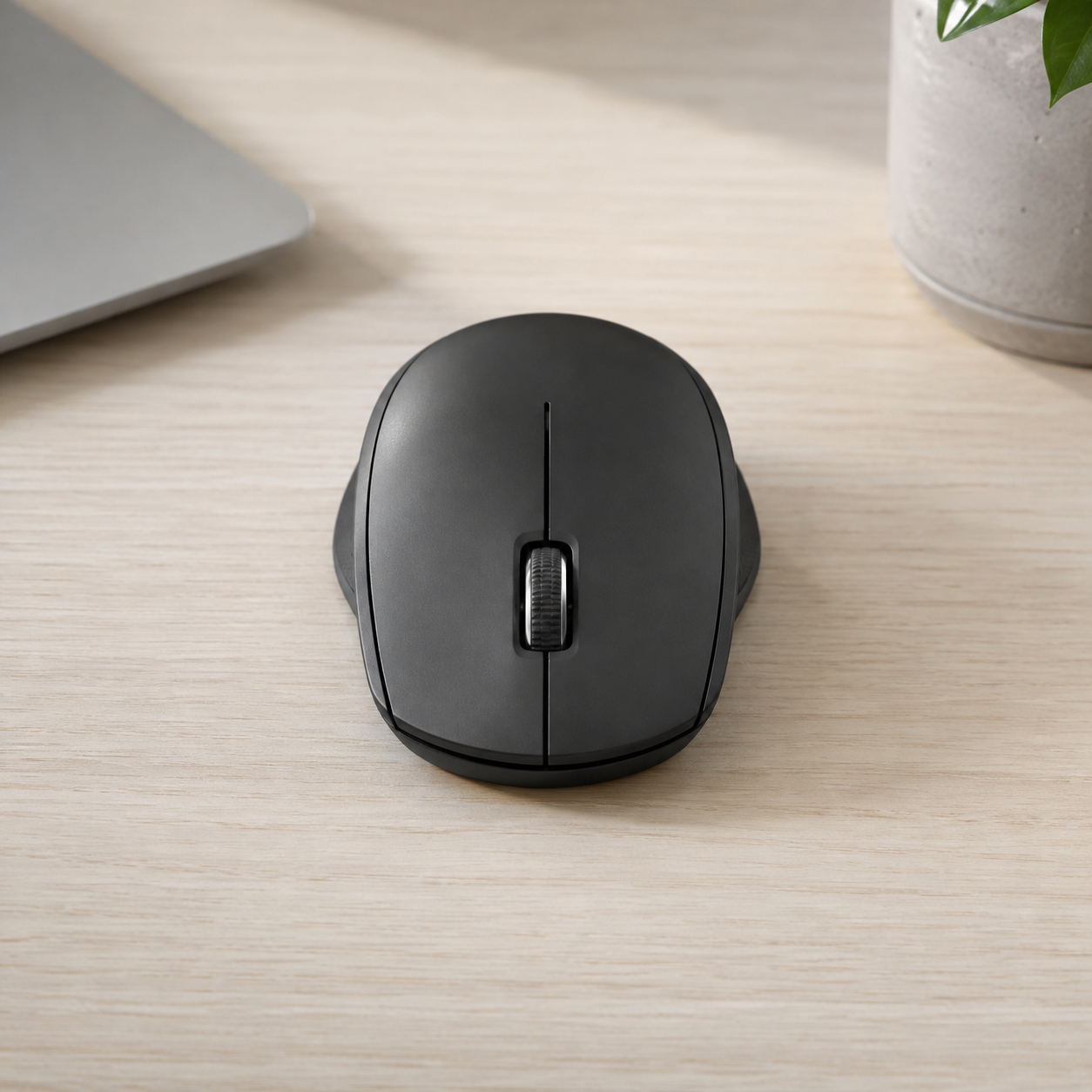
**Image 1 purpose:** Product-use evaluation. **Insert after:** Build a Product Brief That Can Be Tested. **Caption:** "A mouse should be evaluated in the task and device environment it is intended to support." **ALT:** "computer mouse beside a laptop for B2B product evaluation." **AI image prompt:** "Photorealistic commercial product photograph of one computer mouse beside a laptop and keyboard on a clean office desk, full product visible, natural daylight, realistic textures, no logos, no text, no watermark."
**Image 2 purpose:** Connection and quality-control check. **Insert after:** Quality Control and Shipment Inspection. **Caption:** "Functional quality checks confirm tracking, controls, connection, power, and package contents." **ALT:** "Asian technician testing computer mouse connection and controls in an electronics factory." **AI image prompt:** "Photorealistic documentary electronics-factory photo of an Asian quality-control technician testing a computer mouse with a laptop and receiver on a clean workbench, realistic industrial lighting, no logos, no readable text, no watermark."
**Mid-article CTA:** Send Your Requirements after the importer checklist. **End CTA:** Get a Quote after the conclusion. **Popup trigger:** 40% scroll, 30 seconds, or exit intent. **Popup title:** "Find the Right Mouse for Your Market". **Required fields:** Name, Email, Phone. **Submit button:** "Send Requirements".
Conclusion
The best computer mouse features depend on the workflow. Work and study users usually need comfort, stable tracking, predictable scrolling, and simple pairing. Travel users may value compact size, protected receiver storage, and flexible connection. Gaming and content-creation users may need more direct controls, profile management, or repeatable sensor settings, but those functions should be tested in the actual software and device environment. A clear requirement sheet, realistic sample test, controlled package, and pre-shipment inspection are more valuable than a long generic feature list. ByteAero supports B2B buyers with product matching, sample review, packaging coordination, factory-testing planning, and shipment-inspection preparation. Send your requirements to begin a focused computer mouse sourcing discussion.